If an illustrative five-hour tour loses 45 minutes to hotel collection, two hours to driving and 45 minutes to parking, walking and regrouping, how many listed landmarks still count as visits? The answer depends less on the landmark count than on six route checks covering pickup, distance, access type, queues, fixed bookings and total cost.
Should you book a half-day or full-day Dubai city tour?
A half-day Dubai city tour suits an orientation route with drive-bys and brief photo stops. Choose a full day when combining old Dubai, the coast and Downtown, or entering a ticketed attraction at a fixed time.
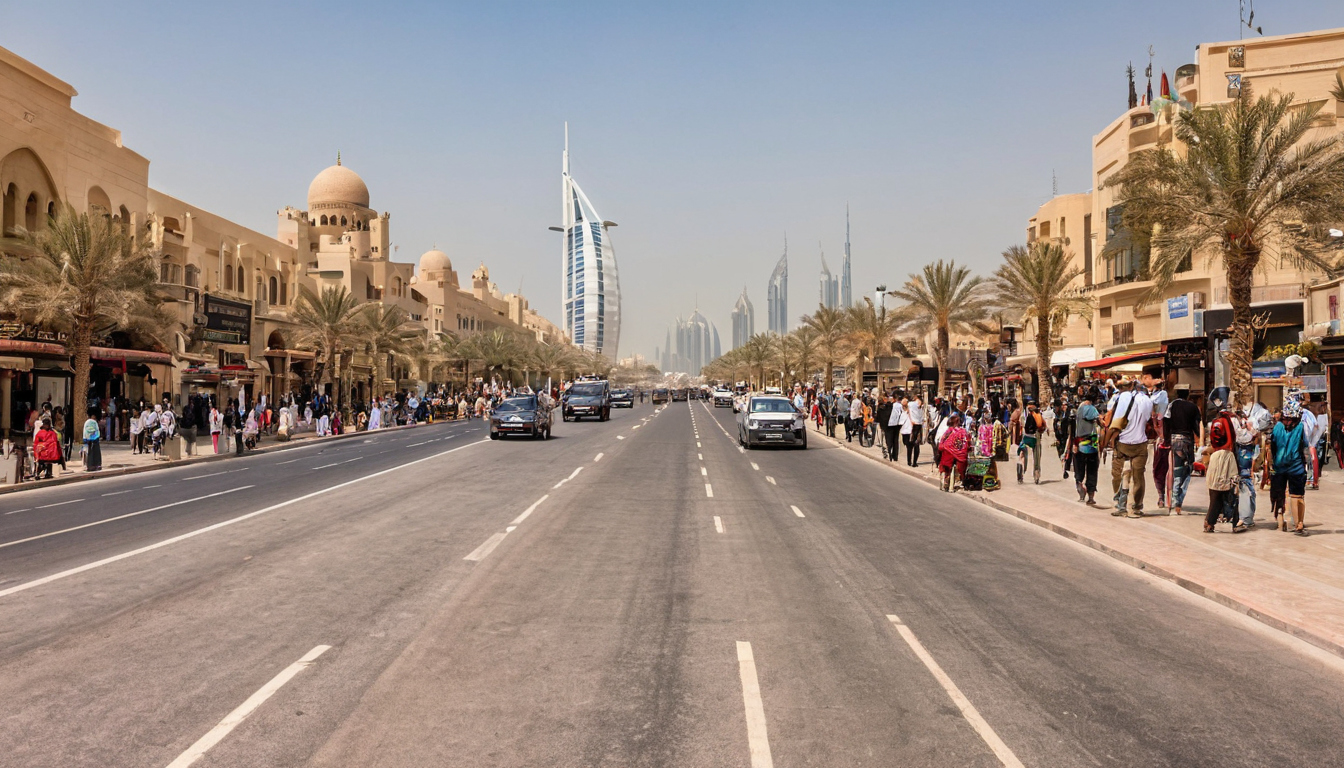
Should you book a half-day or full-day Dubai city tour shown with relevant destination, access, and visitor conditions.
A half-day Dubai city tour works when orientation matters more than attraction entry
- Shared half-day, commonly advertised around four to five hours: best for one or two neighbouring districts, with two or three photo stops and little or no attraction entry.
- Private half-day: better for families or passengers with limited walking because the route, waiting and pickup can be controlled.
- Fixed afternoon plans: protect a generous hotel-transfer buffer, particularly when choosing a desert safari that fits the same-day itinerary.
A full-day Dubai city tour works when the route crosses multiple sightseeing zones
- Shared full-day, often advertised around eight to ten hours: suitable for Creek, Jumeirah, Palm Jumeirah and Downtown, provided only one major attraction requires entry.
- Private full-day: offers the strongest route control when a timed ticket or evening commitment cannot move.
Confirm whether the duration runs from hotel pickup to drop-off or starts only after the final collection. That definition determines how much usable sightseeing time remains.
How much advertised tour time becomes usable sightseeing time?
Usable sightseeing time equals the advertised duration minus hotel collection, cross-city driving, vehicle access, parking, walking, queues, passenger regrouping and the return transfer. A long landmark list does not prove that passengers will spend meaningful time at those landmarks.
Shared pickup and parking consume more than the advertised stop time
A shared coach may collect passengers from several hotels, use a central meeting point or transfer guests from a feeder vehicle. A minibus normally has fewer access and regrouping constraints, while a private car can usually leave when the booked party is ready. Ask whether the clock starts at your hotel, the final collection point or the first landmark.
A listed 15-minute photo stop does not mean the complete stop consumes 15 minutes. The vehicle must reach a suitable drop-off point, passengers must walk to the viewpoint, and the group must return and board. Attraction entry also needs allowances for security, ticket validation and indoor navigation.
Test minimum, typical and disrupted scenarios
Do not rely on one precise journey-time promise. Audit the route using three explicitly illustrative scenarios:
- Minimum: direct collection, prompt passengers, straightforward access and no material queue.
- Typical: several pickups, ordinary traffic variation, parking walks and routine regrouping.
- Disrupted: roadworks, an event, late passengers, changed access or an attraction queue.
Record the check date, hotel district, departure period and expected return period. Separate pickup, driving, parking, walking, sightseeing, meals, shopping stops and the return transfer. Then identify the first optional stop that can be shortened or removed. That usable-time calculation determines what belongs in a half-day route.
Which stops realistically fit into a half-day Dubai city tour?
A realistic half-day Dubai city tour should stay within one sightseeing zone or follow a simple linear route with brief exterior stops. Combining old Dubai, Palm Jumeirah and Downtown on a shared departure usually leaves too little time for attraction entry after collection and the return journey.
An old Dubai route should prioritise the Creek area
A workable heritage sequence is Jumeirah Mosque (exterior photo stop), Al Fahidi Historical Neighbourhood (independent walk), an abra crossing (short ride), then the Spice and Gold Souks (independent walk). As planning allowances rather than live traffic readings, allow roughly 15 to 30 minutes from Jumeirah Mosque to Al Fahidi and 45 to 75 minutes for the crossing and souk walk.
Mosque entry should appear as included only when the operator confirms the visitor programme, dress rules and access time. Heat, uneven lanes and the walk between abra stations and souks may slow families and travellers with limited mobility. A Deira or Bur Dubai return supports this route; a Marina or Palm return may require removing Jumeirah Mosque.
A modern half-day route should remain coastal or Downtown
A coastal route can combine Burj Al Arab (exterior photo stop), Madinat Jumeirah (walk) and Palm Jumeirah (drive-through with one photo stop). A Downtown alternative can include Dubai Mall (walk), Burj Khalifa (exterior view or separately timed entry) and Dubai Frame (exterior photo stop).
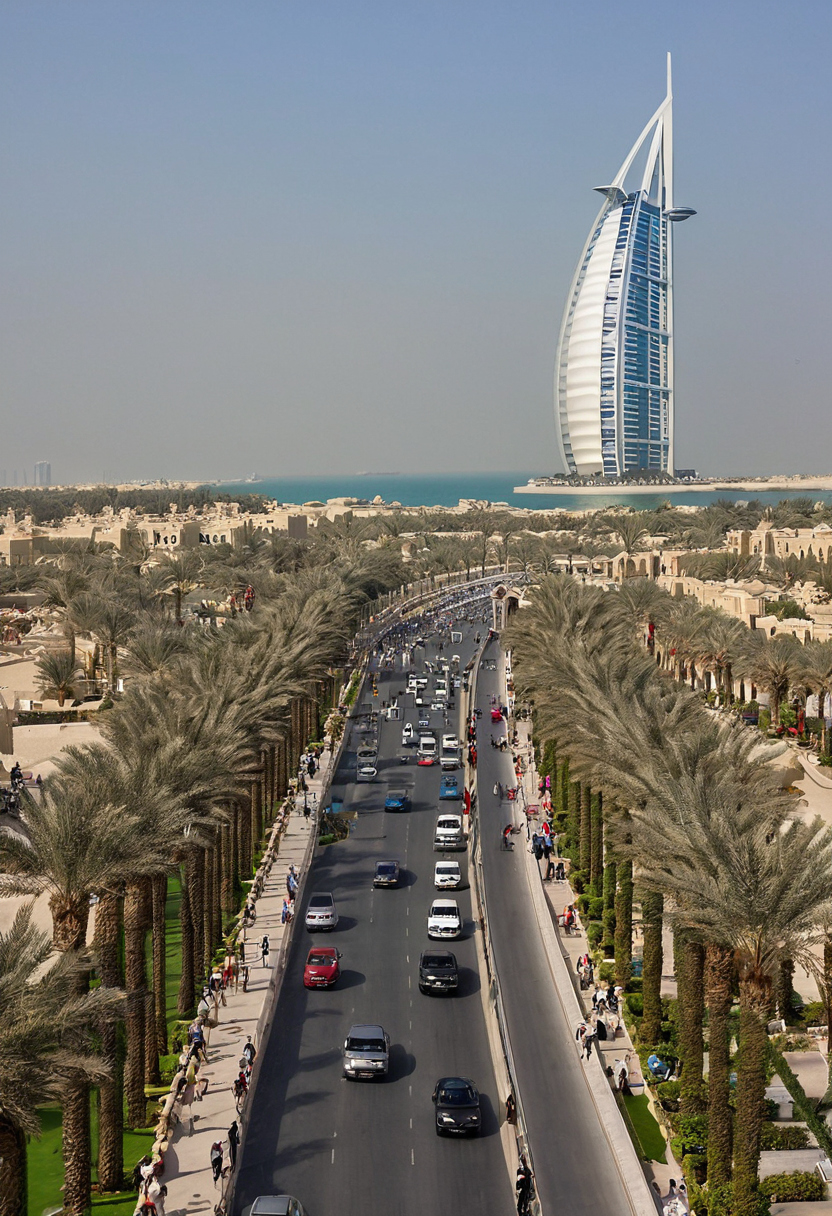
Which stops realistically fit into a half-day Dubai city tour shown with relevant destination, access, and visitor conditions.
Review current Dubai Mall parking information and Dubai Frame visitor information before treating either location as a quick entered stop. If a delay threatens the return, remove the final photo stop rather than compress every visit. Visitors wanting heritage and a timed modern attraction should move to a full-day route.
Which stops realistically fit into a full-day Dubai city tour?
A full-day Dubai city tour can connect old Dubai, Jumeirah and one modern destination when the route follows a clear geographical order and includes only one timed attraction. Several ticketed attractions turn a city overview into a fragile transfer schedule.
Use one timed attraction as the itinerary anchor
An illustrative old-to-new route could collect guests between 8:00 and 9:00, reach the Creek area around 9:30, allow a 60-minute heritage walk, stop near Jumeirah for exterior photographs before lunch, then continue to Downtown or the Museum of the Future area for a mid-afternoon booking. These are planning examples, not measured journey guarantees.
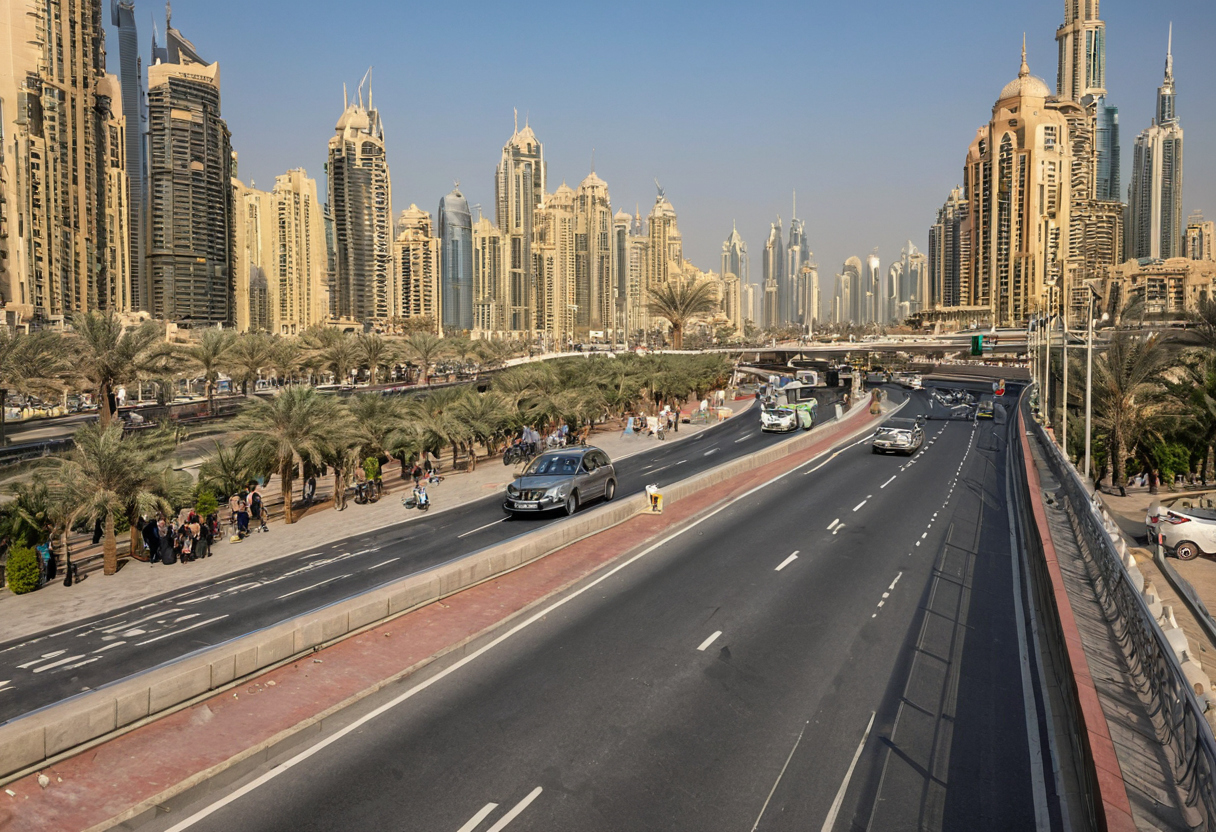
Which stops realistically fit into a full-day Dubai city tour shown with relevant destination, access, and visitor conditions.
Allow 45 to 60 minutes for lunch and state whether the operator provides a meal, selects a food stop or leaves guests to buy food independently. Before fixing the route, check current arrival instructions, security procedures and late-arrival terms. For example, review the Museum of the Future visitor information and the ticket seller’s amendment conditions.
Protect the priority stop and nominate a removable stop
The timed entry should be protected; a secondary beach photograph or drive-by should be removable. After a moderate delay, shorten lunch or remove the drive-by. After a longer delay, skip the secondary photo stop rather than risk losing the booked entry.
Request a hotel return window based on the final stop and hotel district, not a citywide promise. Anyone with an evening booking should protect extra transfer time, particularly when confirming the pier and departure time for a Dubai Marina dhow cruise. The remaining question is whether every advertised landmark means entry, a photo stop or a drive-by.
How can you tell whether an advertised Dubai tour stop is a visit or a drive-by?
Treat a stop as a genuine visit only when the listing states its approximate duration, access type and admission inclusion. Request a written stop-by-stop itinerary under the operator’s current booking terms before paying.
Translate the booking language into likely access
- Drive-by or panoramic view: passengers normally remain in the vehicle, and traffic may limit visibility.
- Photo stop: passengers usually leave the vehicle for an exterior photograph without admission.
- Walk: the itinerary should identify the walking area, guide service and separate transport fares, such as an abra ticket.
- Entry included: the operator should name the attraction and confirm whether the booking includes a timed slot.
An attraction name alone proves nothing. “Dubai Frame” could mean an exterior photograph, while an entered visit requires admission and enough time for access and queues.
Ask six route questions before paying
- When does the advertised duration start and finish?
- What is the pickup window and collection area?
- How long is each stop, and can passengers exit?
- Which admissions are included, and who books timed entry?
- Are shopping stops and meals compulsory, optional or excluded?
- What happens after delay, closure, cancellation, no-show or route substitution?
Once the operator defines access in writing, compare the total price against usable sightseeing time rather than the number of landmarks in the headline.
Which Dubai city tour offers the best value for your schedule?
The best-value Dubai city tour delivers the priority stops at the lowest realistic cost per usable sightseeing hour, not the lowest headline price. Compare offers for the same date, pickup district and inclusions, then add tickets, meals, supplements, fees and cancellation exposure.
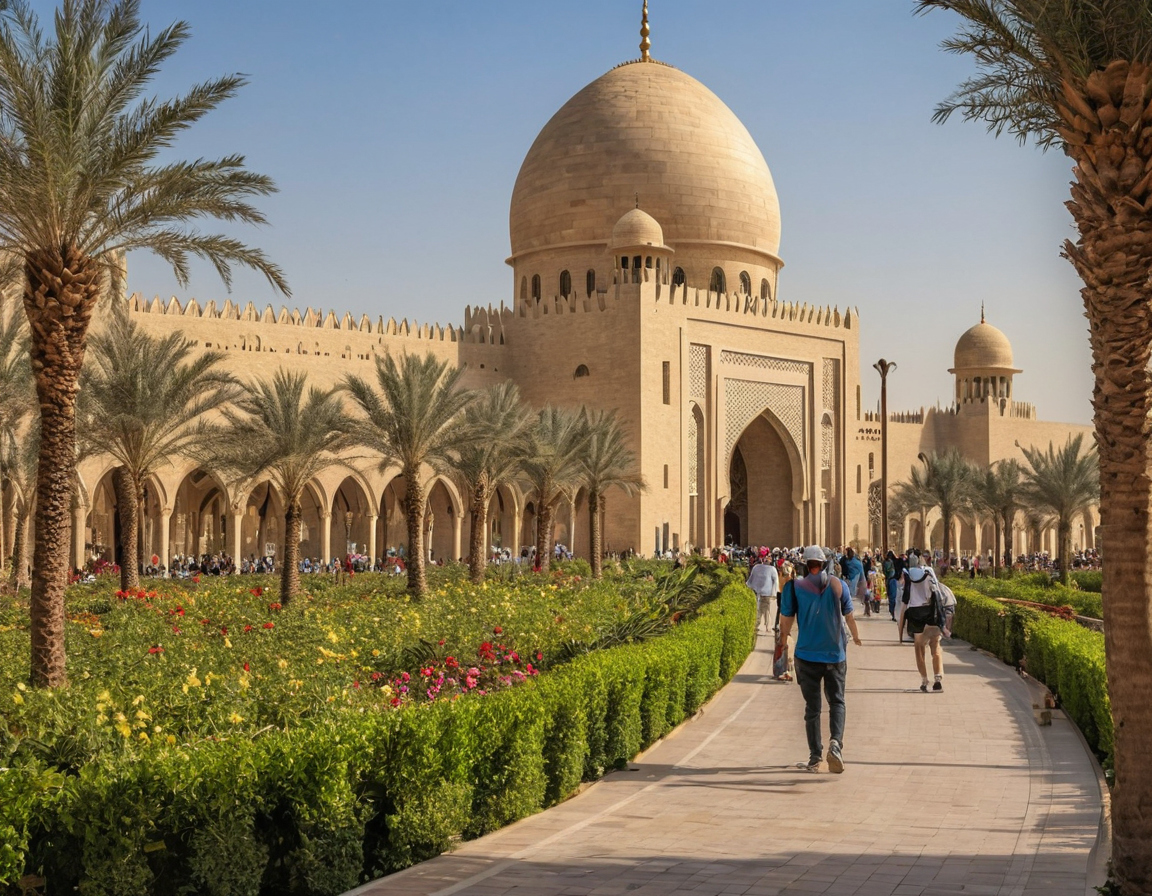
Which Dubai city tour offers the best value for your schedule shown with transport, entry, and visitor-movement context.
A private tour can be better value when route control prevents wasted time
A private vehicle becomes more competitive for families and small groups when direct pickup, adjustable stop lengths and removal of unwanted landmarks create more sightseeing time. Confirm vehicle capacity, parking, tolls, waiting time, overtime charges and whether route changes remain possible after booking.
Calculate the dated total for a solo traveller, couple and family, then divide each total by estimated usable sightseeing hours. Treat checking Dubai Miracle Garden transport and visit timing as a separate seasonal calculation rather than assuming the attraction fits a standard cross-city route.
- Orientation seekers: choose a shared half-day tour.
- Heritage-focused visitors: choose a compact Creek-area route.
- Families: consider a private route when flexibility justifies the premium.
- Mobility-limited travellers: require a confirmed suitable vehicle and fewer transfers.
- Passengers with evening bookings: choose a half-day or private tour with a protected return time.
Route-stress-test FAQ
What does a half-day Dubai city tour typically include?
Expect drive-bys, exterior photographs and short walks across one or two nearby zones. Ask how many stops let passengers leave the vehicle.
Is a half-day or full-day tour better for first-time visitors?
Choose half-day for orientation and a full day for old-to-new coverage with one entered attraction.
Is a tour worth it compared with taxis or the Metro?
A tour adds route coordination and commentary. Independent travel offers more stop control but requires separate navigation, tickets and transfers.
Can one tour include old Dubai, Palm Jumeirah, Burj Al Arab and Downtown?
A full day can cover them as a mixture of walks, photo stops and drive-bys. It cannot provide substantial entry time at every location without rushing.
How many days are sufficient with a safari and one major attraction?
Plan separate time blocks for the city route, desert safari and ticketed attraction. Avoid placing two fixed, non-refundable commitments around a shared tour with an uncertain return.
Final decision: book only after the operator states the route order, access type at every stop, total payable price and expected return window in writing.